Southwest
Water Crisis

PEOPLE / PLACES

Communities facing water cuts

The reservoirs of the Southwest are draining, and Colorado River Monitor shows that day by day. This site shows the consequence: the towns and communities whose water has already stopped, or that have been told when it will. Every place on the map is a dated event with the sources that document it.

people in affected communities
205,654
communities tracked
7
most recent event, June 22, 2023
Navajo Nation
7 of 7 communities

What happened

  • Cut off · A supplier stopped delivering the water the community depended on.
  • Ran dry · The community's own wells, intake or reservoir failed.
  • Restricted · An authority declared a water emergency with mandatory rationing or a counted supply of days.
  • At risk · An official body has published when, or under what conditions, the community loses its supply.
  • Excluded · Never connected to a piped supply, documented by a dated official finding.

Navajo Nation

Arizona · Tribal nation

Population (2020)
165,158
Finding
June 22, 2023

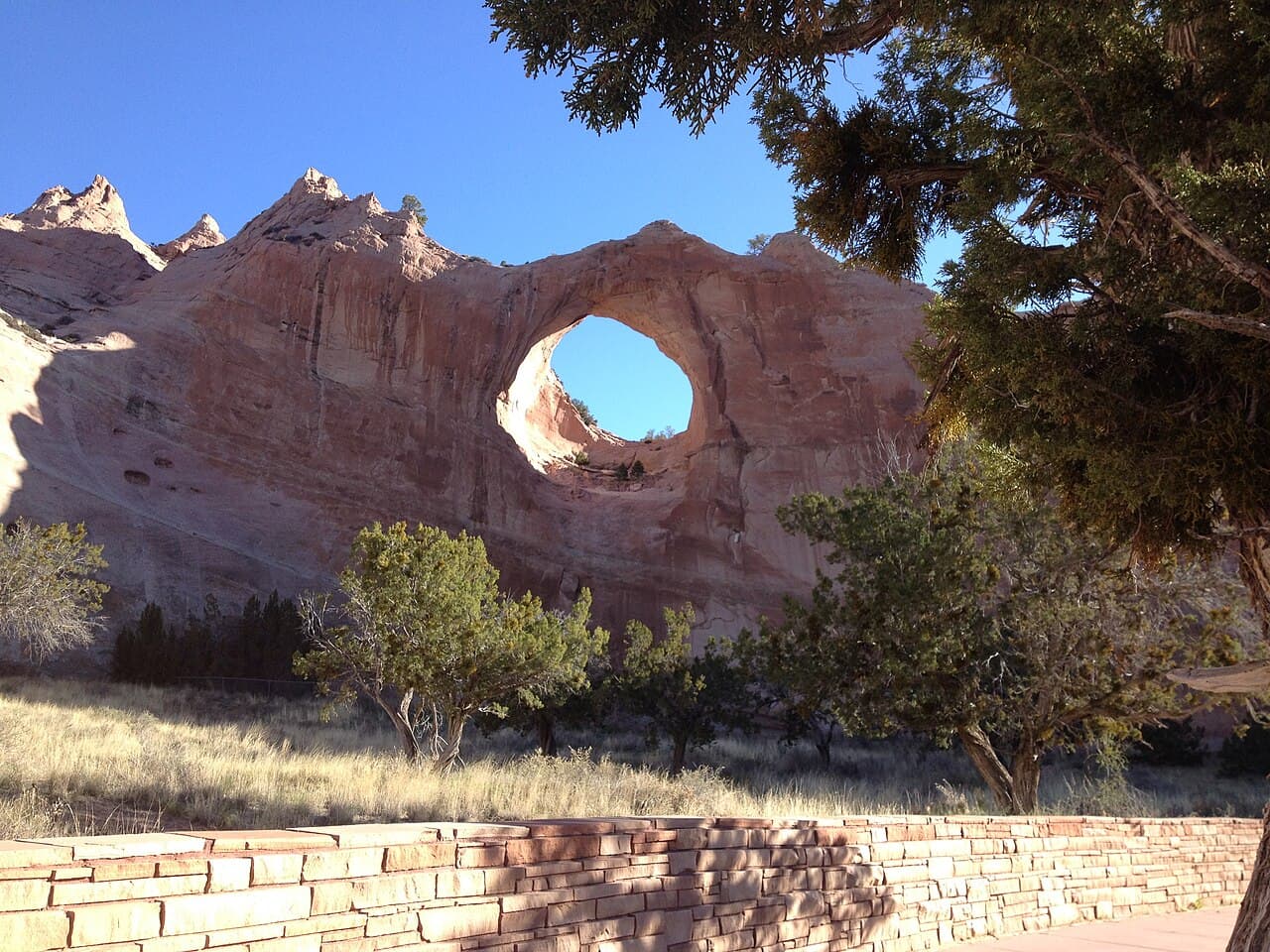
The Navajo Nation spans about 17 million acres of Arizona, New Mexico and Utah, and a large share of its homes have never had piped water: the Navajo Nation Council told the U.S. Senate in 2023 that roughly 30 percent of homes lack running water, while the EPA cited 2020 estimates of about 15 percent of the population without piped water. On June 22, 2023 the U.S. Supreme Court held in Arizona v. Navajo Nation that the 1868 treaty reserved water for the reservation but imposed no duty on the United States to assess the Nation's needs or secure water for it. The ruling left the Nation to pursue water through further litigation, settlement or legislation.

Excluded
No photograph available

Rio Verde Foothills

Arizona · Maricopa County

Population (2023)
2,200
Water cut
January 1, 2023

Rio Verde Foothills is an unincorporated area of Maricopa County next to Scottsdale where roughly 500 homes without wells depended on water trucked from a City of Scottsdale fill station. Citing Colorado River shortage declarations and its drought management plan, Scottsdale stopped letting hauled water leave the city on January 1, 2023, after notices sent in 2021 and 2022. Haulers had to source water from much farther away at sharply higher cost, and an interim supply through a legislature-created standpipe district did not arrive until October 2023.

Cut offRestored January 1, 2026

Las Vegas

New Mexico · San Miguel County

Population (2020)
13,166
Water cut
July 27, 2022

After the 2022 Hermits Peak/Calf Canyon Fire burned the Gallinas River watershed, monsoon runoff carried ash and sediment into the river, the city's main source, and the treatment plant could not process it. On July 27, 2022 the city issued a disaster declaration, the mayor said the reservoirs held less than 50 days of stored water, and the governor declared a state of emergency two days later. The city moved to Stage 6 and then Stage 7 restrictions, asking residents to use no more than 44 gallons a day, and by early September officials reported about 20 days of clean water left before a temporary pre-treatment system came online.

Restricted

Coalinga

California · Fresno County

Population (2020)
17,590
Water cut
July 1, 2021

Coalinga depends entirely on Central Valley Project surface water delivered under a Bureau of Reclamation contract. After Reclamation limited the city to public health and safety deliveries in June 2021, the City Council proclaimed a Water Conservation Emergency on July 1, 2021 with mandatory cuts and drought surcharges, and continued it indefinitely that December. In 2022 the allocation fell to roughly a quarter of normal, officials projected the city would run dry by December, and the city bought 600 acre-feet on the open market for about $1.1 million, later reimbursed by a state grant.

RestrictedRestored March 16, 2023
No photograph available

Teviston

California · Tulare County

Population (2020)
1,185
Water cut
June 9, 2021

The Teviston Community Services District's only working well broke down on June 9, 2021 at the start of a heat wave, leaving the whole community of about 350 connections without running water. The district said the water table had dropped far enough that sand was drawn into the pump and destroyed it. Residents lived on bottled water and tanker loads hauled from Porterville into the town's two storage tanks for roughly six weeks.

Ran dryRestored July 2021
No photograph available

East Porterville

California · Tulare County

Population (2020)
5,549
Water cut
August 2014

East Porterville's roughly 1,800 homes relied on shallow private wells fed by Tule River recharge. As the drought lowered the water table through 2014 the wells failed one by one: by late summer the county had logged 182 of about 1,400 households without water, and by November 784 wells had failed countywide, most of them here. Residents lived for years on county-delivered bottled water and non-potable tanks at a cost that reached about $650,000 a month.

Ran dryRestored February 2018

Magdalena

New Mexico · Socorro County

Population (2020)
806
Water cut
June 5, 2013

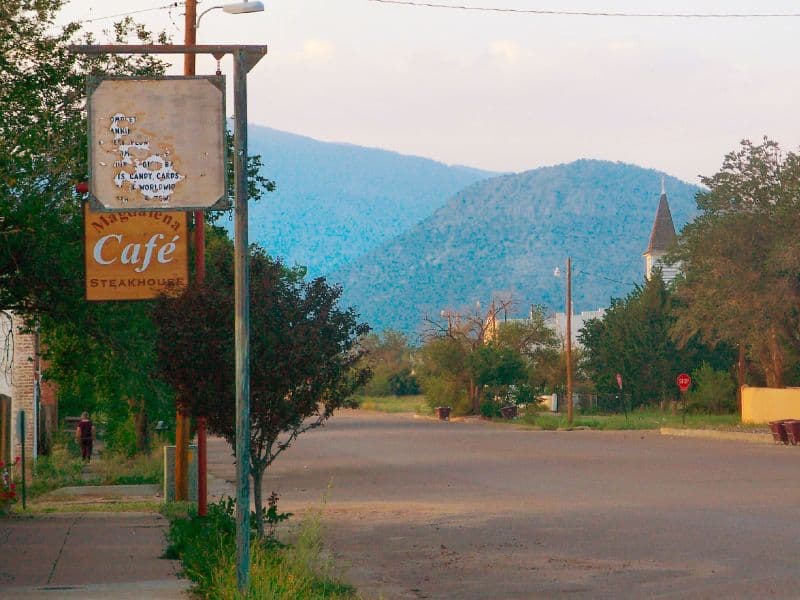
On June 5, 2013 the water level in the village's only operating well dropped below the pump and Magdalena's roughly 900 residents lost piped water; the state issued a boil-water advisory the same day. The water table had fallen about 20 feet since January in a three-year drought, and officials later acknowledged they had not checked the well level in over a year. Potable water was trucked in from Socorro and White Sands Missile Range and handed out at the fire house for weeks.

Ran dryRestored July 3, 2013